Human Factors Training
Understanding human performance, limitations and error management in aviation.


Human Factors Training
Specialist Human Factors & Crew Resource Management Training for Aviation, Maintenance and Transport Organisations
Who We Support
- Part 145 Approved Maintenance Organisations
- Commercial airlines & non-scheduled operators
- Business jet & turboprop operators
- Charter & air taxi operators
- Flight Training Organisations & ATOs
- Aerodrome & airport operators
- Air traffic service providers
- Rail operators & infrastructure managers
- Port authorities & maritime operators
- Corporate aviation departments
- Aviation start-ups building initial HF programmes
Why Human Factors Training Matters
The case for Human Factors training is not difficult to make — the accident record makes it. From the controlled flight into terrain events of the 1970s and 1980s that drove the development of Crew Resource Management, through the maintenance error chain accidents that led to mandatory Human Factors training for certifying engineers under JAR-145, to the automation management failures and crew coordination breakdowns that continue to feature in contemporary accident reports — the pattern is consistent. When things go seriously wrong in aviation, the technical failure is rarely the whole story. The human performance failure — the missed cue, the unchallenged assumption, the communication breakdown, the decision made under pressure with incomplete information — is almost always part of it.
Human error is rarely the cause of an accident. It is almost always a symptom.
Enquire About This Service
Standards We Work To
- ICAO Annex 19
- EASA Regulations
- UK CAA Standards
- ISO 9001:2015
- GCAA (UAE) REGULATIONS
- CASA (Australia)
Related
The Regulatory Requirement
Regulatory Framework
Human Factors Training Requirement
ICAO Annex 19 / SMS
Beyond regulatory compliance, the most progressive aviation organisations treat Human Factors training not as a minimum obligation to be met but as an investment in operational performance. The evidence consistently shows that well-designed Human Factors training reduces error rates, improves team communication, strengthens safety reporting culture and produces measurably better outcomes in high-stakes operational environments.
Human Factors Training Programmes
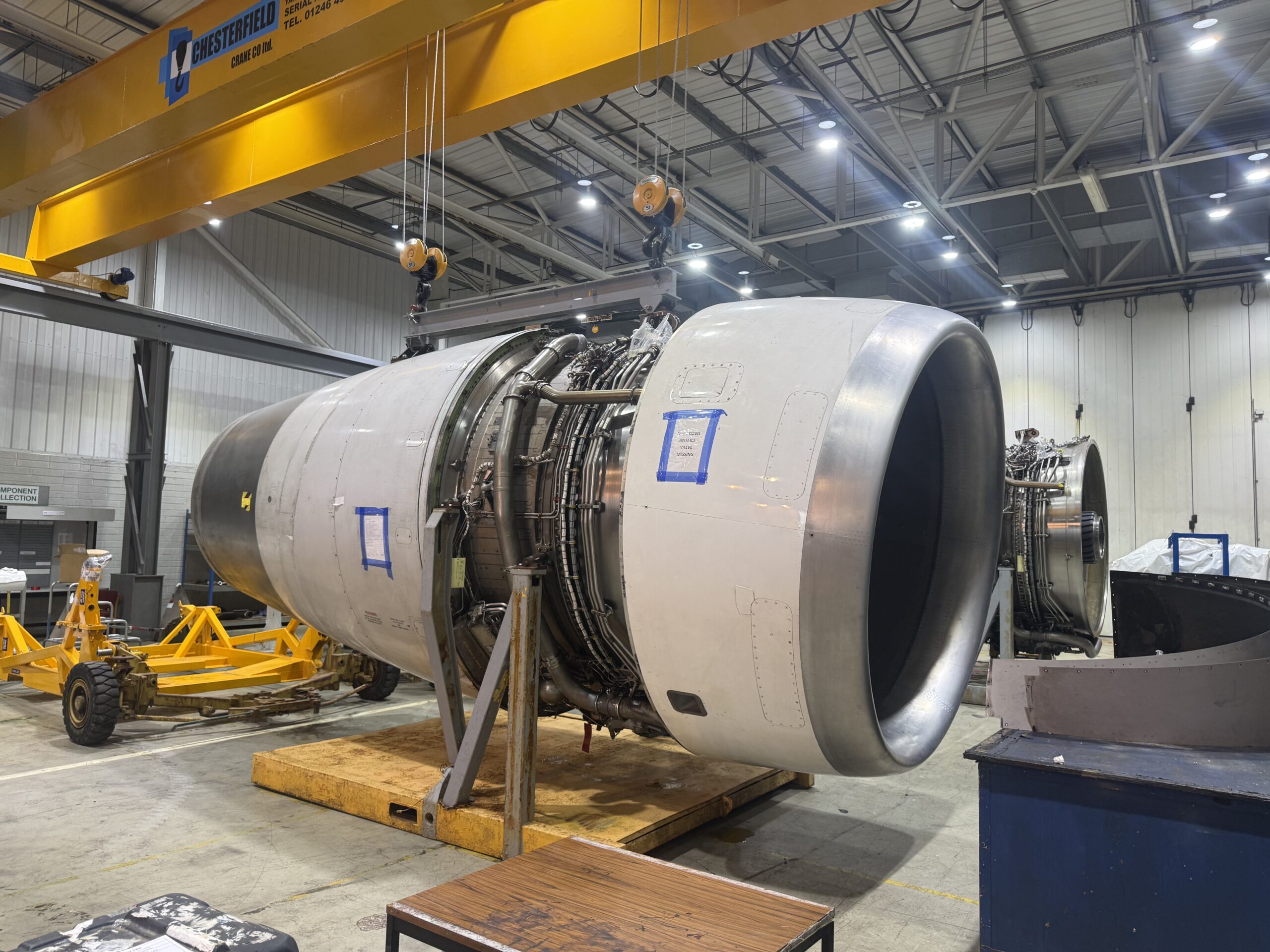

Part 145 Maintenance Human Factors Training
Human Factors training for maintenance personnel is mandated under Part 145 and is one of the areas most frequently found deficient at competent authority oversight audits — not because organisations are not delivering it, but because the training delivered does not meet the depth, the operational specificity or the continuation training interval requirements of the regulation. Generic presentations covering the SHELL model and Dirty Dozen, delivered once on induction and repeated unchanged two years later, satisfy neither the spirit nor the letter of the regulatory requirement. They also produce no measurable change in how engineers approach their work.
- Human performance and limitations — sensory and perceptual limitations, attention and vigilance in maintenance tasks, memory and workload management
- The SHELL model — Liveware-Hardware, Liveware-Software, Liveware-Environment and Liveware-Liveware interfaces in the maintenance environment
- The Dirty Dozen — twelve human factors categories (lack of communication, complacency, lack of knowledge, distraction, lack of teamwork, fatigue, lack of resources, pressure, lack of assertiveness, stress, lack of awareness, norms) with maintenance-specific case studies for each
- Maintenance error types and error-producing conditions — slips, lapses and mistakes in the maintenance context; task interruption and its consequences
- Fatigue risk in aviation maintenance — shift patterns, extended duty periods, night work, the physiological basis of fatigue and its effect on maintenance performance
- Communication in maintenance teams — shift handover, task card management, verbal communication standards, technical documentation errors
- Supervision and oversight — the role of the supervisor in error prevention; the consequences of inadequate supervision in maintenance environments
- Maintenance error investigation and reporting — just culture principles, voluntary occurrence reporting, the value of near miss data
- Organisational factors and safety culture — how management decisions, resource allocation, commercial pressure and cultural norms create the conditions for maintenance error
- Individual and team assertiveness — speaking up when something is wrong; challenging unsafe acts and conditions in a team environment
Initial training covers the full curriculum above. Continuation training delivered at two-year intervals is designed to build on the initial programme — reinforcing core concepts, incorporating new case study material drawn from recent occurrence data, addressing any recurring error themes identified in the AMO’s own occurrence reports, and introducing any regulatory or best-practice developments since the previous training cycle.
Crew Resource Management — Flight Crew
- Human performance and limitations specific to the flight deck environment — attention management, task saturation, situational awareness and its loss
- Threat and Error Management (TEM) — threat identification, error recognition and recovery, undesired aircraft states and their management
- Automation management — mode confusion, automation surprise, appropriate use of automation at different phases of flight and in abnormal situations
- Crew communication standards — standard phraseology, callout discipline, briefing and de-briefing standards, communication under time pressure
- Decision-making under uncertainty — structured decision-making frameworks, time pressure management, go/no-go and diversion decision processes
- Workload management — task prioritisation, workload distribution between PF and PM, the sterile cockpit principle
- Situational awareness — building and maintaining shared situational awareness in a multi-crew environment; recognising and recovering from SA loss
- Leadership and followership in the flight deck — the Pilot in Command’s leadership role; effective followership; assertiveness and challenge
- Cross-cultural CRM considerations — for operators with multinational crew establishments or international route networks
- Fatigue management — recognising and mitigating the operational effects of fatigue; FRMS awareness for crew
- CRM in abnormal and emergency situations — crew performance under high stress; role of CRM in managing declared emergencies
- Integration with simulator training — AACS works with operators to embed CRM assessment dimensions in OPC and line check scenarios
Crew Resource Management — Cabin Crew
- Human performance in the cabin environment — passenger management workload, attention management, fatigue on long-haul routes
- Communication in the cabin team — pre-flight briefing standards, in-flight communication discipline, handover at crew rest breaks
- Cabin-to-flight-deck communication — when and how to communicate safety concerns to the PIC; making effective safety reports under pressure
- Decision-making in the cabin — assessing passenger medical events, disruptive passenger situations, smoke and fume events, turbulence risk
- Situational awareness in the cabin — recognising abnormal flight conditions from cabin cues; preparing the cabin for unexpected emergency landings
- Leadership in the cabin — the senior cabin crew member’s leadership role; managing the cabin team under stress
- Passenger behaviour and crowd management — managing non-compliant passengers; evacuation command and control
- CRM in emergency situations — cabin crew actions in declared emergencies; coordination with the flight deck; post-evacuation assembly and accountability
Maintenance Resource Management
- Team dynamics in the maintenance environment — how maintenance teams form, function and fail; effective and ineffective team behaviours
- Communication in maintenance teams — effective briefing, task handover, shift changeover communication standards and documentation practices
- Assertiveness and challenge in maintenance — speaking up about errors, unsafe conditions and non-standard practices; the role of the certifying engineer in error prevention
- Decision-making under pressure — maintenance decisions made under time pressure, resource constraints and commercial pressure; how these conditions affect decision quality
- Planning and workload management — maintenance planning effectiveness, work package management, task prioritisation under resource constraint
- Supervision effectiveness — the supervisory role in error prevention; recognising and managing at-risk behaviours in the team
- Organisational and cultural factors in maintenance error — how management decisions, commercial pressure and normalised deviation create the conditions for maintenance events
- Case study analysis — detailed review of maintenance error chain accidents with structured group analysis of causal and contributory factors
Human Factors for Managers & Supervisors
Management Human Factors programmes delivered by AACS cover:
- The manager’s role in human performance — how management decisions create or mitigate the organisational conditions for human error
- Organisational accident models — Reason’s Swiss Cheese Model, the influence of latent conditions on frontline performance, and what managers can do about them
- Safety culture and just culture — creating and sustaining an environment where people report errors and near misses without fear; the management behaviours that build or destroy reporting culture
- Fatigue risk management for managers — roster design, workload distribution, recognising and responding to fatigue risk in the team
- Commercial pressure and safety decision-making — recognising when commercial pressure is compromising safety margins; the skills to push back effectively
- Incident investigation for managers — understanding the systemic factors in maintenance and operational events; moving beyond blame to systemic corrective action
- Supervision effectiveness — what effective safety supervision looks like in practice; the difference between supervision and surveillance
- Accountable Manager obligations — the specific Human Factors obligations of the Part 145 or Part-OPS Accountable Manager
Human Factors in Aviation Incident Investigation
- Accident and incident causation models — from Heinrich’s Triangle to Reason’s Organisational Accident Model; understanding how events develop from systemic conditions
- Human error taxonomy — distinguishing slips, lapses, mistakes and violations; understanding error types and their different causes and corrective action implications
- Error-producing conditions analysis — identifying the situational, environmental, team and organisational factors that produced the error-likely conditions
- Just culture in investigation — applying a just culture framework to distinguish blameable from non-blameable human error; managing the boundary between accountability and blame
- Structured investigation methodology — evidence collection, witness interview technique, timeline construction, causal factor analysis and root cause identification
- Contributing factor analysis frameworks — HFACS (Human Factors Analysis and Classification System) and other structured frameworks for identifying systemic contributory factors
- Effective corrective action development — moving beyond individual blame to corrective actions that address the systemic conditions that produced the event
- Investigation report writing — producing investigation reports that are clear, analytically rigorous, and capable of supporting genuine organisational learning
Fatigue Risk Management Training
- The physiology of fatigue — circadian rhythm, sleep drive and sleep inertia; how the body regulates alertness and how shift work, time zone crossing and extended duty disrupt those mechanisms
- Fatigue and human performance — the specific performance dimensions affected by fatigue; the evidence base for fatigue-related performance degradation in aviation
- Recognising fatigue in self and others — fatigue indicators, self-assessment tools, and the social and professional dynamics that make fatigue disclosure difficult
- Fatigue countermeasures — strategic napping, light exposure management, caffeine use, in-seat rest, pre-duty sleep strategies and their evidence-based effectiveness
- Roster design and fatigue risk — how shift patterns, duty period length and rest period adequacy affect fatigue accumulation; reading a roster for fatigue risk
- Regulatory fatigue management frameworks — EASA ORO.FTL requirements, UK CAA FTL frameworks, and the obligations of the operator and the individual crew member
- FRMS design and implementation — for operators and ATOs implementing a Fatigue Risk Management System as an alternative means of compliance or as a supplementary control
- Fatigue reporting and monitoring — designing fatigue reporting systems that collect usable data; using fatigue data to identify high-risk roster patterns
Human Factors Training for Non-Aviation Transport Sectors
- Rail — safety-critical worker Human Factors awareness, SPAD (signal passed at danger) prevention, fatigue management for train crew and track workers, supervisor competency in Human Factors risk management
- Maritime — bridge team resource management, engine room resource management, fatigue and watch-keeping under STCW hours of rest requirements, just culture in maritime incident investigation
- Ports — operational Human Factors for port workers and supervisors, lifting operation team communication, shift handover in continuous port operations, fatigue risk in port gate and control room environments
Training Design & Delivery Approach
Built Around the Operational Environment
Scenario-Based and Participative
Calibrated to the Regulatory Requirement
Continuation Training That Builds, Not Repeats
Human Factors Programme Design Services
Human Factors Programme Development
- Full Human Factors training programme development — content, learning objectives, delivery methodology and assessment framework
- Facilitator guide and instructor notes development — giving internal facilitators the guidance to deliver consistently and effectively
- Case study library development — sector-specific and organisation-specific case studies drawn from the accident record and the organisation’s own occurrence data
- Training materials production — presentation decks, participant workbooks, discussion scenario packs and reference materials
- Assessment and competency documentation framework — enabling the organisation to demonstrate participant engagement and learning
- Training records management system design — ensuring the organisation can demonstrate compliance with continuation training interval requirements
- Internal facilitator preparation and quality assurance support
Human Factors Programme Review & Gap Analysis
Services include:
- Gap analysis of existing programme content against Part 145 Human Factors requirements, ORO.FC.115 CRM content requirements or applicable national authority standards
- Assessment of delivery methodology — evaluating whether current delivery approaches are likely to produce genuine learning and behaviour change
- Continuation training cycle review — assessing whether the current continuation programme builds on the initial training or simply repeats it
- Training records review — assessing whether current records demonstrate compliance with continuation training interval requirements
- Corrective action plan — a prioritised set of recommendations for programme improvement
- Pre-audit preparation — ensuring the Human Factors training programme and its records will withstand authority oversight scrutiny
Why AACS for Human Factors Training
Built on Operational Expertise, Not Training Theory
Over 30 Years of Aviation Regulatory Experience
Cross-Sector Application
Regulatory Compliance Assured
Independent and Evidence-Based
Our Advisory Philosophy for Human Factors Training
- Every programme is built around the specific operational environment of the people being trained — not imported from another sector or another era
- Training is participative and scenario-based — not a lecture delivered to a passive audience
- Continuation training builds progressive competence — it does not repeat initial content unchanged
- Case studies are drawn from real events — including, where appropriate, the organisation’s own occurrence and near miss data
- The regulatory requirement is met in full — content, intervals, records and programme documentation
- The goal is behaviour change in the operational environment — not a training record that demonstrates compliance
- Our advice and content are independent and evidence-based — reflecting the current state of the Human Factors evidence base, not a proprietary commercial framework
Speak to an AACS Specialist
Human Factors Training
Specialist Human Factors & Crew Resource Management Training for Aviation, Maintenance and Transport Organisations
Human error is the single most significant contributory factor in aviation accidents and incidents. That statement has appeared in accident investigation reports, ICAO guidance documents and safety authority publications for over four decades — and the evidence base behind it has grown, not diminished, as the aviation industry has become safer in almost every other respect. The aircraft are more reliable. The navigation systems are more precise. The meteorological data is more accurate. The maintenance standards are higher. And yet human performance — the capability, the limitations, the decision-making and the team behaviour of the people who operate, maintain and manage aviation systems — remains the factor most likely to determine whether a flight, a maintenance task or an operational decision goes right or goes wrong.
Human Factors training exists to close that gap. Not by making people work harder, but by helping them work better — by giving them an accurate model of how human performance works under operational conditions, a toolkit for recognising when those conditions are degrading their performance or the performance of those around them, and the team skills to manage complex situations before they become emergencies. Done well, Human Factors training produces organisations where people communicate more clearly, manage errors more effectively, challenge more confidently and recover from unexpected events more reliably. Done badly — as a compliance exercise, a classroom box-tick, a generic presentation delivered annually without connection to the operational environment — it produces nothing except a training record.
Aerospace and Aviation Consulting Services (AACS) designs and delivers Human Factors training that is operationally grounded, regulatory compliant, and built around the specific environment in which the people being trained work. We train flight crew, maintenance engineers, cabin crew, air traffic control personnel and operational management — across aviation, maintenance, rail, maritime and transport sectors — with programmes that are calibrated to the actual human performance challenges those people face, not generic content imported from another industry or another era.
Who We Support Part 145 Approved Maintenance Organisations │ Commercial airlines & non-scheduled operators │ Business jet & turboprop operators │ Charter & air taxi operators │ Flight Training Organisations & ATOs │ Aerodrome & airport operators │ Air traffic service providers │ Rail operators & infrastructure managers │ Port authorities & maritime operators │ Corporate aviation departments │ Aviation start-ups building initial HF programmes |
Why Human Factors Training Matters
The case for Human Factors training is not difficult to make — the accident record makes it. From the controlled flight into terrain events of the 1970s and 1980s that drove the development of Crew Resource Management, through the maintenance error chain accidents that led to mandatory Human Factors training for certifying engineers under JAR-145, to the automation management failures and crew coordination breakdowns that continue to feature in contemporary accident reports — the pattern is consistent. When things go seriously wrong in aviation, the technical failure is rarely the whole story. The human performance failure — the missed cue, the unchallenged assumption, the communication breakdown, the decision made under pressure with incomplete information — is almost always part of it.
What the accident record also shows is that Human Factors failures are not random. They are systematic. They arise from predictable conditions: fatigue and high workload, poorly designed procedures, inadequate supervision, team dynamics that suppress challenge, organisational cultures that normalise deviation, and individuals who have not been equipped with accurate mental models of their own performance limitations. Systematic failures have systematic solutions. Human Factors training is one of the most important of them.
Human error is rarely the cause of an accident. It is almost always a symptom. The conditions that produce human error — high workload, fatigue, inadequate communication, normalised deviation, suppressed challenge — exist in the organisation long before the error occurs. Effective Human Factors training gives people the awareness to recognise those conditions and the skills to manage them. That is what separates a training programme that changes performance from one that simply satisfies a regulatory requirement. |
The Regulatory Requirement
Human Factors training is not optional for most approved aviation organisations. The regulatory frameworks that govern commercial aviation in the UK and Europe mandate it — in some cases as a specific training requirement, in others as part of the broader safety management and competency obligations that approved organisations must meet.
Regulatory Framework | Human Factors Training Requirement |
EASA Part 145 / UK Part 145 | Mandatory Human Factors training for all personnel involved in maintenance under 145.A.30(e) and 145.A.35. Initial training before conducting licensed maintenance; continuation training at intervals not exceeding two years. |
EASA Part-ORA / UK Part-ORA | Human Factors principles embedded throughout ATO exposition and training programme requirements. Instructor competency and training delivery quality obligations have HF dimensions. |
EASA Part-OPS / UK Part-OPS (ORO) | CRM training mandatory for all flight crew under ORO.FC.115 — initial CRM before operating as crew, recurrent CRM at defined intervals. Cabin crew CRM under ORO.CC.115. |
ICAO Annex 1 & Doc 9683 | ICAO Human Factors Training Manual (Doc 9683) provides the international standard. Annex 1 embeds Human Factors competencies in licence requirements for flight crew. |
ICAO Annex 19 / SMS | Safety Management System requirements mandate a safety culture and organisational conditions that Human Factors training directly supports — reporting culture, just culture, error management. |
UK CAA CAP 715 | The UK CAA’s introduction to Human Factors for maintenance personnel — the reference document for Part 145 HF training content in the UK. |
Rail (ORR / Network Rail) | Safety-critical worker competency and fatigue management obligations embed Human Factors principles for rail operations and infrastructure management. |
Beyond regulatory compliance, the most progressive aviation organisations treat Human Factors training not as a minimum obligation to be met but as an investment in operational performance. The evidence consistently shows that well-designed Human Factors training reduces error rates, improves team communication, strengthens safety reporting culture and produces measurably better outcomes in high-stakes operational environments.
Human Factors Training Programmes
Part 145 Maintenance Human Factors Training
Human Factors training for maintenance personnel is mandated under Part 145 and is one of the areas most frequently found deficient at competent authority oversight audits — not because organisations are not delivering it, but because the training delivered does not meet the depth, the operational specificity or the continuation training interval requirements of the regulation. Generic presentations covering the SHELL model and Dirty Dozen, delivered once on induction and repeated unchanged two years later, satisfy neither the spirit nor the letter of the regulatory requirement. They also produce no measurable change in how engineers approach their work.
AACS designs and delivers Part 145 Human Factors training that is built around the maintenance environment: the specific tasks, tools, teams and organisational conditions that affect engineer performance in that particular AMO. We use real maintenance error data, real occurrence reports, and real case studies from the maintenance accident record to ground the training in the operational context that participants recognise and engage with.
Part 145 Human Factors training programmes delivered by AACS cover:
- Human performance and limitations — sensory and perceptual limitations, attention and vigilance in maintenance tasks, memory and workload management
- The SHELL model — Liveware-Hardware, Liveware-Software, Liveware-Environment and Liveware-Liveware interfaces in the maintenance environment
- The Dirty Dozen — twelve human factors categories (lack of communication, complacency, lack of knowledge, distraction, lack of teamwork, fatigue, lack of resources, pressure, lack of assertiveness, stress, lack of awareness, norms) with maintenance-specific case studies for each
- Maintenance error types and error-producing conditions — slips, lapses and mistakes in the maintenance context; task interruption and its consequences
- Fatigue risk in aviation maintenance — shift patterns, extended duty periods, night work, the physiological basis of fatigue and its effect on maintenance performance
- Communication in maintenance teams — shift handover, task card management, verbal communication standards, technical documentation errors
- Supervision and oversight — the role of the supervisor in error prevention; the consequences of inadequate supervision in maintenance environments
- Maintenance error investigation and reporting — just culture principles, voluntary occurrence reporting, the value of near miss data
- Organisational factors and safety culture — how management decisions, resource allocation, commercial pressure and cultural norms create the conditions for maintenance error
- Individual and team assertiveness — speaking up when something is wrong; challenging unsafe acts and conditions in a team environment
Initial training covers the full curriculum above. Continuation training delivered at two-year intervals is designed to build on the initial programme — reinforcing core concepts, incorporating new case study material drawn from recent occurrence data, addressing any recurring error themes identified in the AMO’s own occurrence reports, and introducing any regulatory or best-practice developments since the previous training cycle.
Crew Resource Management — Flight Crew
Crew Resource Management training for flight crew is mandated under ORO.FC.115 and is required for all pilots conducting commercial air transport operations. The CRM requirement covers initial training before a pilot operates as crew in commercial air transport, and recurrent CRM at defined intervals thereafter. The regulatory requirement specifies the content areas that CRM training must cover — but the quality of how that content is delivered varies enormously between organisations and training providers.
Effective CRM training is not a lecture. It is a structured learning experience that gives flight crew accurate mental models of human performance under operational conditions, tools for managing those conditions in a two-crew or multi-crew environment, and practice — through facilitated discussion, scenario-based learning and simulator integration — in applying those tools to realistic operational situations. AACS designs CRM programmes that meet this standard, calibrated to the operator’s specific aircraft, route environment and crew culture.
Flight crew CRM programmes developed and delivered by AACS cover:
- Human performance and limitations specific to the flight deck environment — attention management, task saturation, situational awareness and its loss
- Threat and Error Management (TEM) — threat identification, error recognition and recovery, undesired aircraft states and their management
- Automation management — mode confusion, automation surprise, appropriate use of automation at different phases of flight and in abnormal situations
- Crew communication standards — standard phraseology, callout discipline, briefing and de-briefing standards, communication under time pressure
- Decision-making under uncertainty — structured decision-making frameworks, time pressure management, go/no-go and diversion decision processes
- Workload management — task prioritisation, workload distribution between PF and PM, the sterile cockpit principle
- Situational awareness — building and maintaining shared situational awareness in a multi-crew environment; recognising and recovering from SA loss
- Leadership and followership in the flight deck — the Pilot in Command’s leadership role; effective followership; assertiveness and challenge
- Cross-cultural CRM considerations — for operators with multinational crew establishments or international route networks
- Fatigue management — recognising and mitigating the operational effects of fatigue; FRMS awareness for crew
- CRM in abnormal and emergency situations — crew performance under high stress; role of CRM in managing declared emergencies
- Integration with simulator training — AACS works with operators to embed CRM assessment dimensions in OPC and line check scenarios
Crew Resource Management — Cabin Crew
Cabin crew CRM training is mandated under ORO.CC.115 and must cover the same core CRM principles as flight crew training — human performance, team communication, decision-making, situational awareness, workload management and assertiveness — but delivered in the context of the cabin environment and the cabin crew role. The most effective cabin crew CRM programmes are also explicitly designed to address the interface between the cabin and the flight deck: how cabin crew communicate safety-critical information to the flight deck, how the relationship between senior cabin crew and the PIC functions under pressure, and how the two-cabin-crew-member dynamic operates during an emergency.
Cabin crew CRM programmes developed and delivered by AACS cover:
- Human performance in the cabin environment — passenger management workload, attention management, fatigue on long-haul routes
- Communication in the cabin team — pre-flight briefing standards, in-flight communication discipline, handover at crew rest breaks
- Cabin-to-flight-deck communication — when and how to communicate safety concerns to the PIC; making effective safety reports under pressure
- Decision-making in the cabin — assessing passenger medical events, disruptive passenger situations, smoke and fume events, turbulence risk
- Situational awareness in the cabin — recognising abnormal flight conditions from cabin cues; preparing the cabin for unexpected emergency landings
- Leadership in the cabin — the senior cabin crew member’s leadership role; managing the cabin team under stress
- Passenger behaviour and crowd management — managing non-compliant passengers; evacuation command and control
- CRM in emergency situations — cabin crew actions in declared emergencies; coordination with the flight deck; post-evacuation assembly and accountability
Maintenance Resource Management
Maintenance Resource Management (MRM) applies the principles of Crew Resource Management to the aviation maintenance environment — recognising that the human performance challenges in maintenance teams are as significant as those in flight crew, and that the team dynamics, communication patterns and decision-making processes of maintenance personnel under pressure have direct airworthiness consequences. MRM training goes beyond the individual Human Factors awareness covered in Part 145 initial training to address the team-level skills that determine how well a maintenance team manages complex tasks, shift transitions, resource constraints and unexpected technical challenges.
MRM training programmes developed and delivered by AACS cover:
- Team dynamics in the maintenance environment — how maintenance teams form, function and fail; effective and ineffective team behaviours
- Communication in maintenance teams — effective briefing, task handover, shift changeover communication standards and documentation practices
- Assertiveness and challenge in maintenance — speaking up about errors, unsafe conditions and non-standard practices; the role of the certifying engineer in error prevention
- Decision-making under pressure — maintenance decisions made under time pressure, resource constraints and commercial pressure; how these conditions affect decision quality
- Planning and workload management — maintenance planning effectiveness, work package management, task prioritisation under resource constraint
- Supervision effectiveness — the supervisory role in error prevention; recognising and managing at-risk behaviours in the team
- Organisational and cultural factors in maintenance error — how management decisions, commercial pressure and normalised deviation create the conditions for maintenance events
- Case study analysis — detailed review of maintenance error chain accidents with structured group analysis of causal and contributory factors
Human Factors for Managers & Supervisors
The people who make decisions about workload, resource allocation, rostering, shift patterns, training prioritisation and commercial priorities have more influence on human performance outcomes than any individual operator or engineer. A management team that understands Human Factors — that recognises how the conditions it creates affect the people working within them — is a safety asset. A management team that does not understand Human Factors — that sets schedules without considering fatigue, that allows pressure to override safety concerns, that normalises corner-cutting — is a safety liability, regardless of how well-trained its frontline staff are.
AACS delivers Human Factors programmes specifically designed for operational managers, supervisors and Accountable Managers — giving leadership the conceptual framework and practical tools to make decisions that protect rather than degrade human performance.
Management Human Factors programmes delivered by AACS cover:
- The manager’s role in human performance — how management decisions create or mitigate the organisational conditions for human error
- Organisational accident models — Reason’s Swiss Cheese Model, the influence of latent conditions on frontline performance, and what managers can do about them
- Safety culture and just culture — creating and sustaining an environment where people report errors and near misses without fear; the management behaviours that build or destroy reporting culture
- Fatigue risk management for managers — roster design, workload distribution, recognising and responding to fatigue risk in the team
- Commercial pressure and safety decision-making — recognising when commercial pressure is compromising safety margins; the skills to push back effectively
- Incident investigation for managers — understanding the systemic factors in maintenance and operational events; moving beyond blame to systemic corrective action
- Supervision effectiveness — what effective safety supervision looks like in practice; the difference between supervision and surveillance
- Accountable Manager obligations — the specific Human Factors obligations of the Part 145 or Part-OPS Accountable Manager
Human Factors in Aviation Incident Investigation
When things go wrong in aviation — when a maintenance error produces an airworthiness event, when a crew coordination failure leads to a serious incident, when a near miss occurs that could have been much worse — the investigation that follows determines whether the organisation learns from it or simply records it. The quality of that investigation, and the quality of the corrective actions it produces, depends critically on whether the investigators understand the Human Factors dimensions of the event: the error-producing conditions, the organisational contributory factors, and the systemic failures that allowed the event chain to develop.
AACS provides specialist Human Factors training for aviation occurrence investigators, safety managers and compliance monitoring personnel — equipping them with the analytical framework and investigative methodology to conduct investigations that identify root causes rather than blame individuals.
Human Factors investigation training delivered by AACS covers:
- Accident and incident causation models — from Heinrich’s Triangle to Reason’s Organisational Accident Model; understanding how events develop from systemic conditions
- Human error taxonomy — distinguishing slips, lapses, mistakes and violations; understanding error types and their different causes and corrective action implications
- Error-producing conditions analysis — identifying the situational, environmental, team and organisational factors that produced the error-likely conditions
- Just culture in investigation — applying a just culture framework to distinguish blameable from non-blameable human error; managing the boundary between accountability and blame
- Structured investigation methodology — evidence collection, witness interview technique, timeline construction, causal factor analysis and root cause identification
- Contributing factor analysis frameworks — HFACS (Human Factors Analysis and Classification System) and other structured frameworks for identifying systemic contributory factors
- Effective corrective action development — moving beyond individual blame to corrective actions that address the systemic conditions that produced the event
- Investigation report writing — producing investigation reports that are clear, analytically rigorous, and capable of supporting genuine organisational learning
Fatigue Risk Management Training
Fatigue is among the most serious and most consistently underestimated Human Factors risks in aviation. It degrades virtually every dimension of human performance — attention, reaction time, decision quality, communication effectiveness, situational awareness and emotional regulation — and it does so in a way that the fatigued individual is poorly positioned to recognise and compensate for. In aviation maintenance, where certifying engineers make airworthiness decisions at the end of night shifts, and in commercial flight operations, where pilots fly across multiple time zones on complex rosters, fatigue risk is not theoretical. It is a daily operational reality.
AACS delivers specialist fatigue risk management training for aviation personnel across all roles — from awareness training for frontline staff through to Fatigue Risk Management System (FRMS) implementation support for operational managers and safety teams.
Fatigue risk management training delivered by AACS covers:
- The physiology of fatigue — circadian rhythm, sleep drive and sleep inertia; how the body regulates alertness and how shift work, time zone crossing and extended duty disrupt those mechanisms
- Fatigue and human performance — the specific performance dimensions affected by fatigue; the evidence base for fatigue-related performance degradation in aviation
- Recognising fatigue in self and others — fatigue indicators, self-assessment tools, and the social and professional dynamics that make fatigue disclosure difficult
- Fatigue countermeasures — strategic napping, light exposure management, caffeine use, in-seat rest, pre-duty sleep strategies and their evidence-based effectiveness
- Roster design and fatigue risk — how shift patterns, duty period length and rest period adequacy affect fatigue accumulation; reading a roster for fatigue risk
- Regulatory fatigue management frameworks — EASA ORO.FTL requirements, UK CAA FTL frameworks, and the obligations of the operator and the individual crew member
- FRMS design and implementation — for operators and ATOs implementing a Fatigue Risk Management System as an alternative means of compliance or as a supplementary control
- Fatigue reporting and monitoring — designing fatigue reporting systems that collect usable data; using fatigue data to identify high-risk roster patterns
Human Factors Training for Non-Aviation Transport Sectors
AACS extends its Human Factors training capability beyond aviation into the rail, maritime and port sectors — sectors where the human performance challenges are structurally similar to aviation but the specific operational context, regulatory framework and safety culture are distinct. Rail safety-critical worker competency frameworks, maritime crew fatigue management under STCW and MLC 2006, and port operational safety management all have significant Human Factors dimensions that generic aviation-derived training does not adequately address.
Sector-specific Human Factors training for transport organisations delivered by AACS covers:
- Rail — safety-critical worker Human Factors awareness, SPAD (signal passed at danger) prevention, fatigue management for train crew and track workers, supervisor competency in Human Factors risk management
- Maritime — bridge team resource management, engine room resource management, fatigue and watch-keeping under STCW hours of rest requirements, just culture in maritime incident investigation
- Ports — operational Human Factors for port workers and supervisors, lifting operation team communication, shift handover in continuous port operations, fatigue risk in port gate and control room environments
Training Design & Delivery Approach
Built Around the Operational Environment
The single most common failure mode in Human Factors training is abstraction. Training that teaches Human Factors principles at a theoretical level — without connecting those principles to the specific operational environment, tasks and error-producing conditions of the people being trained — produces awareness without behaviour change. The engineer who understands the SHELL model in the classroom but has never had it connected to the specific task card errors, shift handover failures and pressure conditions that drive human error in their own maintenance environment has not received effective Human Factors training.
Every AACS Human Factors programme begins with an operational assessment of the client organisation — its approval scope, its workforce, its error history, its occurrence data and its safety culture. The training is built from that assessment. Case studies are drawn from the maintenance environment, the route network or the operational context of the participants. Discussion scenarios reflect conditions that participants recognise. The result is training that engages rather than lectures, and that produces behaviour change rather than compliance records.
Scenario-Based and Participative
Human Factors training that relies primarily on slide-based instruction produces limited retention and minimal behaviour change. Adults learn Human Factors most effectively through structured participation — through case study analysis, facilitated group discussion, scenario-based decision exercises and, for flight crew, simulator-integrated CRM assessment. AACS designs every programme around participative learning methodologies appropriate to the audience and the subject matter — from structured small-group analysis for maintenance teams through to facilitated simulation debriefs for flight crew CRM.
Calibrated to the Regulatory Requirement
AACS ensures that every Human Factors training programme is designed to meet the applicable regulatory requirement in full — Part 145 initial and continuation training intervals, ORO.FC.115 CRM content requirements, Part-ORA Human Factors obligations and applicable national authority standards. We produce training records, competency documentation and programme descriptions in the format required by the authority, and we ensure that the organisation can demonstrate compliance with its Human Factors training obligations at authority audit.
Continuation Training That Builds, Not Repeats
Continuation Human Factors training is where most organisations fail. The initial programme is delivered — often with care and appropriate operational grounding — and then the continuation cycle repeats the same content unchanged two years later. Participants who have already been through the programme disengage. No new learning occurs. The regulatory box is ticked.
AACS designs continuation training cycles that build progressively on the initial programme. Each continuation cycle introduces new case study material drawn from recent occurrence data, addresses any recurring Human Factors themes identified in the organisation’s own safety data, incorporates any regulatory or best-practice developments since the previous cycle, and explores new dimensions of the core Human Factors content in greater depth. Continuation training should develop Human Factors competence over time. AACS programmes are designed to do exactly that.
Human Factors Programme Design Services
Human Factors Programme Development
For organisations that want to conduct Human Factors training in-house — delivered by their own safety managers, training departments or nominated instructors — AACS develops the complete training programme: content, materials, facilitator guides, assessment frameworks and training records. We build programmes that the organisation can own, maintain and deliver independently, and we provide the instructor preparation support needed to ensure internal facilitators can deliver to the required standard.
Services include:
- Full Human Factors training programme development — content, learning objectives, delivery methodology and assessment framework
- Facilitator guide and instructor notes development — giving internal facilitators the guidance to deliver consistently and effectively
- Case study library development — sector-specific and organisation-specific case studies drawn from the accident record and the organisation’s own occurrence data
- Training materials production — presentation decks, participant workbooks, discussion scenario packs and reference materials
- Assessment and competency documentation framework — enabling the organisation to demonstrate participant engagement and learning
- Training records management system design — ensuring the organisation can demonstrate compliance with continuation training interval requirements
- Internal facilitator preparation and quality assurance support
Human Factors Programme Review & Gap Analysis
Organisations that already have Human Factors training programmes in place — either developed internally or inherited from a previous training provider — may need an independent assessment of whether those programmes meet current regulatory requirements and deliver genuine learning value. AACS conducts structured reviews of existing Human Factors training programmes, identifying gaps against the regulatory standard, content that no longer reflects current best practice, and delivery methodologies that are not producing the learning outcomes the organisation needs.
Services include:
- Gap analysis of existing programme content against Part 145 Human Factors requirements, ORO.FC.115 CRM content requirements or applicable national authority standards
- Assessment of delivery methodology — evaluating whether current delivery approaches are likely to produce genuine learning and behaviour change
- Continuation training cycle review — assessing whether the current continuation programme builds on the initial training or simply repeats it
- Training records review — assessing whether current records demonstrate compliance with continuation training interval requirements
- Corrective action plan — a prioritised set of recommendations for programme improvement
- Pre-audit preparation — ensuring the Human Factors training programme and its records will withstand authority oversight scrutiny
Why AACS for Human Factors Training
Built on Operational Expertise, Not Training Theory
AACS Human Factors training is designed and delivered by advisors with direct operational experience in the environments where the training is applied. We understand what a night shift in a Part 145 base maintenance environment feels like. We understand the crew coordination dynamics of a two-crew flight deck on a complex instrument approach. We understand the shift handover pressures in a port operations control room. That operational grounding means our training is credible to the people who receive it — because it reflects the environment they actually work in, not a sanitised classroom version of it.
Over 30 Years of Aviation Regulatory Experience
AACS has been delivering Human Factors advisory and training across aviation for over 30 years. In that time, the Human Factors evidence base has evolved significantly — from the early CRM programmes focused on captain authority and crew assertiveness, through the Threat and Error Management framework, to the current emphasis on Resilience Engineering, Safety-II principles, and the integration of Human Factors into Safety Management System thinking. Our programmes reflect this evolution. We do not deliver 1990s CRM content with updated slides. We deliver training that reflects where the Human Factors evidence base actually is.
Cross-Sector Application
AACS applies Human Factors training across aviation maintenance, flight operations, air traffic services, rail, maritime and port environments. This cross-sector experience matters because Human Factors principles are universal — the physiology of fatigue is the same in a maintenance engineer and a train driver — but their application must be sector-specific. The error-producing conditions in a Part 145 heavy maintenance base are not the same as those in a port control room. Our ability to apply the same robust Human Factors evidence base across different operational contexts, calibrating the delivery to the specific environment of each client, distinguishes AACS from training providers whose experience is limited to a single sector.
Regulatory Compliance Assured
Every AACS Human Factors programme is designed to meet the applicable regulatory requirement in full. We produce the training records, competency documentation and programme descriptions that the authority expects to find at oversight audit — and we ensure that continuation training intervals are tracked and managed so that the organisation remains compliant between audits. When regulatory requirements change, we advise clients on the implications for their training programme and provide updated content to reflect the new standard.
Independent and Evidence-Based
AACS delivers Human Factors training based on the published evidence base — from ICAO, the UK CAA, EASA, the Transportation Safety Board research outputs, and the peer-reviewed Human Factors literature. We have no commercial interest in promoting any particular Human Factors model, tool or product. Our programmes draw on the most robust evidence and the most relevant operational research, not on proprietary frameworks designed to lock clients into a specific commercial ecosystem.
Our Advisory Philosophy for Human Factors Training
AACS approaches Human Factors training with a conviction that is consistent across every programme we design and every session we deliver: training that does not change the way people think about their own performance, or equip them with tools they actually use in their work, has not achieved anything worth measuring. The training record exists. The behaviour change does not.
✔ Every programme is built around the specific operational environment of the people being trained — not imported from another sector or another era
✔ Training is participative and scenario-based — not a lecture delivered to a passive audience
✔ Continuation training builds progressive competence — it does not repeat initial content unchanged
✔ Case studies are drawn from real events — including, where appropriate, the organisation’s own occurrence and near miss data
✔ The regulatory requirement is met in full — content, intervals, records and programme documentation
✔ The goal is behaviour change in the operational environment — not a training record that demonstrates compliance
✔ Our advice and content are independent and evidence-based — reflecting the current state of the Human Factors evidence base, not a proprietary commercial framework
We deliver training that is independently assessed as operationally grounded, regulatory compliant, and built on over 30 years of real-world aviation and transport Human Factors expertise. Whether you are building an initial Human Factors programme, revising a programme that is not delivering genuine learning outcomes, or seeking independent review ahead of an authority audit, AACS provides the expertise to produce training that makes a genuine difference to how your people perform.
Speak to an AACS Specialist
If you need a Human Factors training programme designed, delivered, reviewed or revised — for maintenance personnel, flight crew, cabin crew, operational managers or safety investigators — please contact us. We will be direct about what your programme needs to achieve, what the regulatory requirement demands, and how we can help you build training that genuinely changes performance.