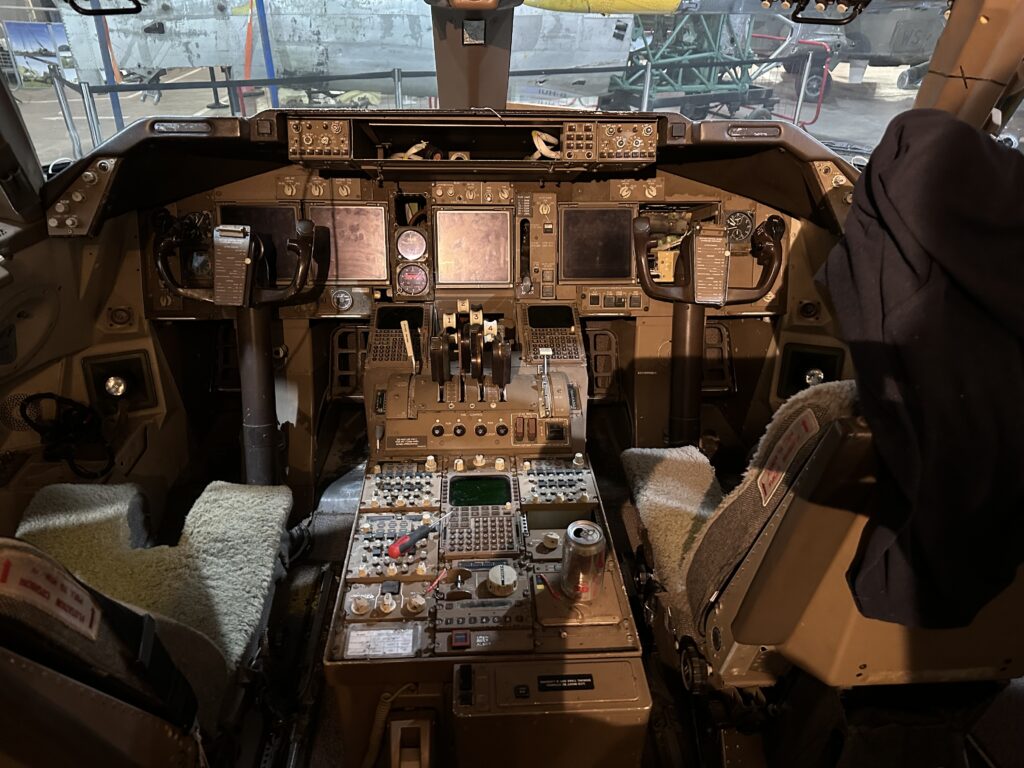






Crew Resource Management (CRM) Training
Crew Resource Management was born out of catastrophe. The accident record of the 1970s — dominated not by technical failures but by breakdowns in crew communication, unchallenged captain authority and poor decision-making under pressure — made clear that the limiting factor in aviation safety was not the aircraft or its systems. It was the human beings operating them, and more specifically, how those human beings worked together under the conditions that flight operations create. CRM was the industry’s response: a structured approach to training the team skills, communication behaviours and decision-making capabilities that determine how well a crew manages the challenges, uncertainties and errors that every flight operation involves.
Fifty years on, CRM has become one of the most extensively researched and rigorously evaluated training interventions in any safety-critical industry. The evidence base for its effectiveness — in reducing error rates, improving crew performance in abnormal situations and strengthening the team behaviours that catch and correct errors before they become accidents — is substantial and consistent. So is the evidence for what makes CRM training fail: generic content delivered without operational grounding, classroom instruction without scenario-based practice, initial training that is never meaningfully revisited, and programmes that satisfy the regulatory requirement without changing anything about how crews actually work together.
Aerospace and Aviation Consulting Services (AACS) designs and delivers CRM training programmes that are operationally grounded, evidence-based, and calibrated to the specific crew culture, aircraft type and route environment of each operator. We develop initial and recurrent CRM programmes for flight crew and cabin crew, design CRM documentation that satisfies the competent authority, and support operators in integrating CRM principles into simulator training and line check frameworks. We do not deliver off-the-shelf CRM. We build programmes that reflect how your crews actually work — and that make them work better.
|
Who We Support Scheduled airlines │ Non-scheduled and charter operators │ Business jet and turboprop operators │ Corporate flight departments │ Helicopter operators │ Cargo and freight operators │ Flight Training Organisations with CRM documentation obligations │ Operators building initial CRM programmes for AOC certification │ Operators revising CRM programmes to reflect regulatory change or fleet development |
What CRM Training Is — and What It Is Not
CRM training is frequently misunderstood — both by organisations that deliver it and by crews who receive it. It is worth being precise about what it is, because the precision matters for programme design.
CRM training is the structured development of the non-technical skills that determine crew performance in multi-crew aviation operations. Non-technical skills are the cognitive and social skills that complement technical flying proficiency: situational awareness, decision-making, communication, workload management, leadership, teamwork and assertiveness. These skills are not personality traits that people either have or do not have. They are learned behaviours that can be taught, practised, assessed and improved. That is what CRM training does.
CRM training is not a values exercise, a motivational programme or a soft skills workshop. It is a structured operational training intervention grounded in human performance science, delivered in the context of specific aircraft types, route environments and crew compositions, and assessed against observable behavioural markers. When it is designed and delivered to this standard, it produces measurable improvements in crew performance. When it is not — when it is treated as a compliance obligation to be satisfied with the minimum effort — it produces nothing of operational value.
|
CRM is not about making crews nicer to each other. It is about equipping them with the cognitive tools and team behaviours to manage the errors, threats and unexpected events that every flight operation involves. The research is unambiguous: crews with strong CRM skills catch more errors, recover more effectively from unexpected situations, and make better decisions under pressure. Crews without them miss the cues, fail to challenge, and allow recoverable situations to become accidents. That is the operational case for CRM. The regulatory requirement is simply the minimum expression of it. |
The Regulatory Framework for CRM Training
CRM training is mandated for commercial air transport operators under both UK CAA and EASA frameworks. The requirements are specific about content, timing and documentation — and they are among the areas most closely scrutinised by competent authorities at AOC certification and subsequent oversight audit.
|
Regulatory Requirement |
Obligation |
|
ORO.FC.115 (UK CAA / EASA) |
CRM training mandatory for all flight crew conducting commercial air transport operations. Initial CRM training required before operating as crew in CAT; recurrent CRM at defined intervals thereafter. Content requirements specified in AMC1 ORO.FC.115. |
|
AMC1 ORO.FC.115 — Content |
Initial CRM must cover all specified content areas including: human factors in aviation, TEM, situational awareness, decision-making, communication, leadership and teamwork, automation management, stress and fatigue. Recurrent CRM must revisit and develop these areas. |
|
ORO.FC.115 — Recurrent CRM |
Recurrent CRM training must be provided at least every year as part of recurrent training. The content and methodology must be documented in OM-D. Assessment of CRM competencies must be integrated into recurrent training and checking. |
|
ORO.CC.115 (Cabin Crew) |
CRM principles must be addressed in cabin crew initial and recurrent safety training. Cabin crew CRM must cover human performance, communication, crew coordination and decision-making in the cabin environment. |
|
AMC1 ORO.FC.115 — Facilitation |
CRM training must be facilitated by a qualified CRM trainer. The qualification requirements for CRM trainers are specified and must be reflected in OM-D. CRM trainer standardisation is a continuing obligation. |
|
OM-D Documentation |
The operator’s CRM training programme, content, delivery methodology, trainer qualifications and assessment framework must be fully documented in OM-D Part D. The authority will examine this documentation at certification and audit. |
|
CRM Assessment in OPC/Line Check |
CRM behavioural markers must be assessed as part of the Operator Proficiency Check and line check. Assessors must be qualified to assess CRM competencies. Assessment records must demonstrate that CRM dimensions are evaluated, not just technical performance. |
The regulatory framework specifies what CRM training must cover and when it must be delivered. It does not specify how it must be delivered. The quality of delivery — the degree to which the training is operationally grounded, scenario-based and genuinely participative — determines whether the programme produces compliance documentation or operational performance improvement. AACS designs programmes that achieve both.
CRM Training Programmes
Initial CRM Training — Flight Crew
Initial CRM training is the foundation of the operator’s CRM programme — the training that equips flight crew with the conceptual framework and behavioural skills they need before they begin operating as crew in commercial air transport. The content requirements are specified in AMC1 ORO.FC.115, and they are substantial. Initial CRM is not a half-day introduction. It is a structured programme that must cover the full range of non-technical skill areas, connect those areas to the specific operational environment of the operator, and give participants the practice — through facilitated scenarios, case study analysis and structured discussion — to begin developing the skills, not merely the awareness.
Initial CRM programmes developed and delivered by AACS cover all AMC1 ORO.FC.115 content areas:
- Human performance and limitations in the flight deck environment — cognitive limitations, attentional tunnelling, confirmation bias, and the performance-degrading effects of high workload, stress and fatigue
- Threat and Error Management (TEM) — the TEM model as an operational framework; identifying threats, recognising errors, managing undesired aircraft states; TEM in the operator’s specific route environment
- Situational awareness — building and maintaining shared situational awareness in a two-crew environment; the precursors and indicators of SA loss; recovery from degraded SA
- Decision-making — naturalistic decision-making under time pressure and uncertainty; structured decision-making frameworks; go/no-go decisions, diversion decisions and fuel management decisions in the operator’s route context
- Communication and crew coordination — standard phraseology, callout discipline, briefing and de-briefing standards, closed-loop communication; communication under time pressure and in high-workload phases of flight
- Leadership and followership — the Pilot in Command’s leadership role; effective followership; the authority gradient and its management; captain-first officer dynamics in normal and abnormal situations
- Assertiveness and challenge — raising concerns effectively; the advocacy-inquiry model; challenge and response procedures; overcoming the social and cultural barriers to challenge
- Workload management and task prioritisation — the sterile cockpit principle; PF/PM task sharing; managing task saturation in high-workload phases; avoiding fixation and inattentional blindness
- Automation management — mode awareness, mode confusion and automation surprise; appropriate use of automation at different workload levels; maintaining manual flying proficiency; managing automation failures
- Stress and fatigue in the flight deck — recognising and mitigating the operational effects of acute stress and cumulative fatigue; FRMS awareness; in-flight fatigue countermeasures
- Abnormal and emergency CRM — crew performance under declared emergencies; workload redistribution; communication with ATC and cabin crew in emergency; post-event crew management
- Cross-cultural CRM considerations — for operators with multinational crew establishments or international operations
Recurrent CRM Training — Flight Crew
Recurrent CRM training is where the majority of CRM programmes fail. The regulatory requirement for annual recurrent CRM is frequently met by repeating the initial programme content in shortened form — a half-day or full-day session that revisits the same slides, the same case studies and the same discussion questions that crews have already seen multiple times. Experienced crews disengage. The training produces no new learning. The regulatory box is ticked.
AACS designs recurrent CRM programmes that build progressively on the initial programme, using each annual cycle to deepen understanding of core CRM principles, introduce new evidence and case material, address specific CRM themes identified in the operator’s own safety data, and develop the skills that matter most for the specific crews and routes in question. Recurrent CRM should be the most operationally relevant training in the annual training calendar. AACS programmes are designed to make it so.
Recurrent CRM programme features developed by AACS include:
- Progressive curriculum design — each annual cycle covers different dimensions of the core CRM content areas, building depth over the training cycle rather than repeating the same surface-level awareness
- Current case study integration — new case study material drawn from recent accident and incident reports, including from the operator’s own occurrence database where available
- Operator-specific safety data themes — CRM themes identified in the operator’s own FOQA data, LOSA observations, safety reports and line check findings are embedded in the recurrent programme
- Scenario-based learning — facilitated group scenarios relevant to the operator’s actual route environment and fleet, requiring active problem-solving and decision-making rather than passive reception
- TEM review — annual refresh of TEM application in the operator’s specific threat environment, updated to reflect any changes to the route network, fleet or ATC environment
- Regulatory update integration — any changes to the CRM regulatory framework, industry guidance or best practice are incorporated into the relevant recurrent cycle
- Simulator integration planning — AACS advises on how recurrent CRM classroom content can be reinforced and assessed in the associated OPC simulator session
Cabin Crew CRM Training
Cabin crew CRM training is a regulatory requirement under ORO.CC.115 but is frequently the weakest element of an operator’s CRM programme. The reasons are structural: cabin crew initial and recurrent training is typically dominated by Safety and Emergency Procedures (SEP), with CRM content squeezed into whatever time remains. The result is cabin crew who can execute evacuation procedures correctly but who have not been given the conceptual framework or the practical skills to manage the most common operational challenges — the ambiguous medical event, the escalating disruptive passenger, the smoke in the cabin of uncertain source, the information flow to and from the flight deck when something unexpected is happening.
AACS designs cabin crew CRM programmes that give the right depth and operational specificity to each CRM content area, integrated appropriately within the cabin crew training schedule. We work with operators to ensure that cabin crew CRM is not an afterthought in the SEP programme but a substantive training element that equips cabin crew to perform their safety role effectively.
Cabin crew CRM programmes developed and delivered by AACS cover:
- Human performance in the cabin environment — passenger management workload, attentional limits during boarding and service, the performance effects of disrupted sleep patterns on long-haul routes
- Situational awareness for cabin crew — recognising abnormal flight conditions from cabin cues; pre-flight threat assessment; interpreting flight deck information during abnormal situations
- Communication within the cabin team — pre-flight briefing effectiveness; in-flight handover at crew rest breaks; communication under noise and time pressure; assertiveness within the cabin team
- Cabin-to-flight-deck communication — when and how to communicate safety concerns to the PIC; the NITS briefing framework; making effective security and medical reports to the flight deck under pressure
- Decision-making in the cabin — structured decision-making for cabin crew in medical events, disruptive passenger situations, smoke and fume events and unexpected turbulence; escalation decision frameworks
- Leadership in the cabin — the senior cabin crew member’s leadership role; asserting authority in the cabin team; managing junior crew under stress; the relationship between the SCCM and the PIC
- Passenger behaviour and influence — communicating effectively with distressed or non-compliant passengers; crowd behaviour and its management; ground-based security threat recognition
- CRM in emergency situations — cabin crew performance in declared emergencies; coordination with the flight deck; command and control during evacuation; post-event crew and passenger management
CRM for Single-Pilot Operations
Single-pilot commercial operations present a CRM challenge that is structurally different from multi-crew environments. There is no co-pilot to catch errors, challenge decisions or share workload at peak demand moments. The CRM skills that matter most in single-pilot operations are the ones that enable the pilot to manage their own performance under the conditions of single-pilot commercial flight: self-monitoring, workload management, automation reliance calibration, decision-making without peer input, and the management of the pilot-passenger communication and authority interface.
AACS develops CRM programmes specifically designed for single-pilot commercial operations — business aviation, air taxi and single-pilot charter — that address the specific performance challenges of operating without a co-pilot in demanding commercial environments.
Single-pilot CRM content developed by AACS covers:
- Self-monitoring and metacognition — the single pilot’s role as their own error-catcher; recognising the degradation of one’s own performance; using structured self-assessment in flight
- Workload management without a co-pilot — task prioritisation, aviate-navigate-communicate hierarchy, managing task saturation without workload redistribution
- Automation reliance in single-pilot operations — appropriate automation use; managing automation failures alone; avoiding over-reliance that degrades manual flying proficiency
- Decision-making alone — structured decision-making frameworks for the single pilot; managing go/no-go and diversion decisions without peer consultation; commercial pressure and decision quality
- Passenger management as a CRM factor — managing the authority interface with passengers; communicating effectively without compromising pilot workload; handling passenger anxiety and non-compliance
- Pilot-controller communication in single-pilot operations — maintaining effective ATC communication while managing high-workload phases
- Fatigue risk in single-pilot commercial operations — the specific fatigue risk profile of single-pilot charter and air taxi operations; self-assessment and mitigation
CRM Trainer Qualification & Standardisation
The quality of CRM training depends critically on the quality of the trainer delivering it. The regulatory framework recognises this: AMC1 ORO.FC.115 specifies qualification requirements for CRM trainers, and operators must demonstrate that their CRM trainers meet those requirements and are periodically standardised. An operator whose CRM programme is delivered by unqualified or unstandardised trainers has a regulatory non-compliance and, more importantly, a training quality risk.
AACS supports operators in building and maintaining their CRM trainer capability — from initial trainer preparation through to standardisation flying and ongoing trainer quality assurance.
CRM trainer support services provided by AACS include:
- CRM trainer preparation — equipping nominated CRM trainers with the facilitation skills, CRM content knowledge and regulatory understanding needed to deliver effective CRM training
- CRM trainer qualification framework documentation — designing the operator’s CRM trainer qualification requirements and assessment process for inclusion in OM-D
- CRM trainer standardisation programme design — annual standardisation events, peer observation and feedback processes, and trainer currency requirements
- CRM trainer assessment criteria — defining the observable behaviours that distinguish effective CRM facilitation from ineffective delivery
- CRM facilitator guide development — detailed session plans and facilitation notes that enable qualified trainers to deliver the programme consistently
- Ongoing trainer advisory support — access to AACS expertise for CRM content queries, difficult facilitation situations and programme development questions
CRM Integration With Simulator Training & Checking
CRM competencies are most effectively assessed and reinforced in the simulator, where the conditions of actual flight operations can be replicated and the behavioural dimensions of crew performance can be observed in context. The regulatory framework requires CRM behavioural markers to be assessed in OPC and line check sessions, and assessors must be qualified to conduct this assessment. In practice, many operators struggle to integrate CRM assessment meaningfully into their simulator checking programmes — either because the assessors are not equipped to observe and evaluate non-technical skills, or because the scenarios do not create the conditions in which CRM skills are meaningfully tested.
AACS supports operators in developing a simulator CRM integration framework that makes the assessment of non-technical skills a genuine dimension of OPC and line check, not a nominal addition to the technical assessment.
Simulator CRM integration support provided by AACS includes:
- CRM behavioural marker framework development — defining observable, assessable behavioural indicators for each CRM competency dimension in the operator’s specific aircraft and route context
- OPC scenario design for CRM assessment — designing simulator scenarios that create the conditions in which situational awareness, decision-making, workload management and communication skills are genuinely tested
- Assessor preparation — equipping type rating examiners and line training captains to observe, evaluate and debrief CRM performance in the simulator
- CRM assessment record design — assessment documentation that records non-technical skill performance in a structured, auditable format
- Debrief framework design — structured debrief methodology that enables assessors to provide meaningful feedback on CRM performance and identify development areas
- Integration with Evidence-Based Training (EBT) frameworks where the operator is implementing EBT
CRM Programme Documentation
The competent authority will examine the operator’s CRM programme documentation at AOC certification and at every subsequent oversight audit. The documentation must demonstrate that the programme meets the content requirements of AMC1 ORO.FC.115, that it is delivered by qualified trainers, that recurrent training is provided at the required intervals, and that CRM competencies are assessed in checking. Incomplete, generic or inaccurate CRM documentation is a finding at authority audit — and, more seriously, an indicator that the operator’s CRM programme may not be meeting the standard the documentation is supposed to describe.
AACS produces CRM documentation that is accurate, complete and structured for authority acceptance. Every element is written to describe the operator’s actual programme — not a generic CRM programme description adapted from a template.
CRM documentation developed by AACS for inclusion in OM-D covers:
- CRM programme overview — training philosophy, programme objectives, training audience and programme structure
- Initial CRM programme description — full content coverage, learning objectives, delivery methodology, duration and assessment framework
- Recurrent CRM programme description — annual cycle structure, content rotation framework, scenario-based elements and assessment integration
- Cabin crew CRM programme description — content, delivery methodology, integration with SEP training and assessment framework
- CRM trainer qualification requirements — initial qualification criteria, currency requirements and standardisation obligations
- CRM trainer standardisation programme description — schedule, methodology and documentation
- CRM competency assessment framework — behavioural marker definitions, assessment methodology and record format for OPC and line check
- CRM training records framework — record content, retention requirements and access controls
Core CRM Programme Services
New AOC CRM Programme Development
For airline start-ups and operators seeking their initial AOC, the CRM programme and its documentation are a required element of the certification package. AACS develops complete initial CRM programmes for new AOC applicants — initial programme content and delivery framework, recurrent programme structure, cabin crew CRM programme, trainer qualification framework and OM-D documentation — working alongside the operator through the authority acceptance process from first submission to AOC grant.
CRM Programme Revision
Established operators require CRM programme revisions when the regulatory framework changes, when the operator’s fleet or route network evolves in ways that change the threat environment, when safety data identifies specific CRM themes requiring attention, or when periodic review reveals that the current programme is not delivering the learning outcomes it should. AACS conducts structured CRM programme reviews and develops revised programmes that address the identified gaps.
Services include:
- Gap analysis of existing CRM programme against current AMC1 ORO.FC.115 content requirements
- Delivery methodology review — assessing whether current delivery approaches are producing genuine learning
- Recurrent curriculum review — assessing whether the recurrent programme builds on initial training or repeats it
- Safety data integration — incorporating operator-specific CRM themes from FOQA, LOSA and safety report data
- Regulatory update implementation — revising the programme to reflect changes to the CRM regulatory framework
- OM-D documentation update — ensuring the programme description accurately reflects the revised programme
Independent CRM Programme Review — Audit Preparation
Many operators seek an independent review of their CRM programme and documentation ahead of an authority oversight audit. AACS provides structured CRM programme reviews that identify the gaps, content deficiencies and documentation weaknesses that an authority inspector would find — and a corrective action plan to address them before the audit.
Services include:
- Structured gap analysis of CRM programme content against AMC1 ORO.FC.115 requirements
- CRM documentation review — assessing whether OM-D accurately and completely describes the programme the operator delivers
- Trainer qualification review — assessing whether CRM trainers meet the applicable qualification requirements
- Training records review — assessing whether records demonstrate delivery at the required intervals and content coverage
- Simulator CRM integration review — assessing whether OPC and line check records demonstrate CRM competency assessment
- Corrective action plan — a prioritised set of actions to address identified gaps before the authority audit
Why AACS for CRM Training
Operationally Grounded, Not Generic
AACS CRM programmes are built from the ground up for the specific operator. The threat environment in OM-C, the automation suite in OM-B, the crew culture, the route network and the specific operational pressures of the organisation shape the programme content from the outset. Crews receive CRM training that is recognisably about the environment they work in — which is the single most important determinant of whether they engage with it and apply it.
Evidence-Based Programme Design
AACS builds CRM programmes on the current state of the human performance evidence base — from the foundational research that produced TEM and the NOTECHS behavioural marker framework through to current work on resilience, adaptive expertise and the integration of CRM with Evidence-Based Training. We do not deliver CRM content frozen at the point it was first written. We design programmes that reflect where the evidence is now — and we update them as the evidence develops.
Scenario-Based and Facilitated, Not Lectured
AACS CRM sessions are designed as facilitated learning experiences, not lectures. Scenarios are drawn from the operator’s actual route environment and fleet. Case studies are selected for their operational relevance to the specific crew group. Discussion is structured to produce genuine engagement with the material, not passive reception. The distinction between a facilitated CRM session and a lecture is the distinction between training that changes behaviour and training that satisfies a training record.
Full Regulatory Compliance
Every AACS CRM programme is designed to meet the applicable regulatory requirement in full — AMC1 ORO.FC.115 content coverage, delivery by qualified trainers, annual recurrent provision, cabin crew CRM under ORO.CC.115 and CRM competency assessment in OPC and line check. We produce the documentation, records and programme descriptions that the authority expects, and we ensure the operator can demonstrate compliance at audit.
Lifecycle Support
AACS supports operators through the full CRM programme lifecycle — from initial programme development and AOC certification through annual recurrent delivery, trainer standardisation, safety data integration and regulatory update implementation. We are available for ongoing advisory support as the programme evolves and as the operator’s fleet, routes and crew culture change over time.
Our Advisory Philosophy for CRM Training
AACS approaches CRM training with a conviction that is consistent across every programme we design and every session we facilitate: the measure of a CRM programme is not the training record it produces. It is the difference it makes to how crews manage the uncertainties, errors and pressures of actual flight operations. A CRM programme that produces comprehensive training records but leaves crew behaviour unchanged has achieved nothing safety-relevant. A programme that changes how a first officer speaks up, how a captain manages high-workload approaches, or how a crew coordinates during an unexpected system failure has done what CRM was invented to do.
 Every programme is built for the specific operator — their fleet, their routes, their crew culture and their threat environment
Content is evidence-based and current — reflecting the state of the human performance science, not a programme written when CRM was first mandated
Delivery is facilitated and scenario-based — crews engage with the material, they do not receive it passively
Recurrent programmes build progressive competence — they do not repeat initial content
Operator safety data drives programme content — CRM themes from FOQA, LOSA and occurrence reports are embedded in the training
Simulator integration is designed in from the outset — not added as a nominal OPC requirement
Full regulatory compliance is assured — AMC1 ORO.FC.115 content, trainer qualifications, documentation and assessment records
Our advice is independent — shaped by what is right for the operator, not by any commercial framework or proprietary product
We deliver CRM training that is operationally credible, evidence-based and built on over 30 years of aviation human performance expertise. Whether you are developing a CRM programme for initial AOC certification, revising a programme that is not delivering genuine learning outcomes, or seeking independent review ahead of an authority audit, AACS provides the expertise to produce training that genuinely improves crew performance.
Speak to an AACS Specialist
If you need a CRM training programme designed, delivered, documented or reviewed — for flight crew, cabin crew, single-pilot operations or AOC certification — please contact us. We will be direct about what your programme needs to achieve, what the regulatory requirement demands, and how we can help you build training that genuinely changes how your crews perfor